BINARY POSITIONS
Sometimes a whole landscape collapses into two points.
Each person stands on one, facing the other, sure that the other’s lens is distorted and their own is clear.
Read moreRead less
Binary positions are powerful because they simplify. They turn a varied terrain into a choice between two places. This series looks at that pull towards either/or: how it forms, how it hardens, and how it looks from each side. It doesn’t take a side. Instead it looks for the rarer ground in between, and for the moment when someone stops looking only at the other and starts looking through what they themselves are holding.
The ideas behind this series are developed in full in MindLenses: Freedom of Belief and the Right of Reciprocity by the artist, Hendrik Ensing.

Available to commission
The series continues beyond the works shown above. Each of the works below is created to commission, for a specific space.
Show the worksHide the works
- Two Points
- A wide, varied landscape with only two places lit and everything else in shadow. A binary is born when the rest of the terrain disappears from view.
- Facing
- Two figures on opposite hills, each looking straight at the other. Each sees the other clearly. Neither sees what is behind them.
- Refraction
- A single beam of light passes through two lenses and splits in two directions. The same source, bent differently, gives two honest but incompatible views.
- Mirror Image
- Two figures in symmetrical stances, each the reverse of the other. Opposites are often shaped alike, and each defines itself by what it isn’t.
- The Narrowing
- Painted in stages: a broad road shrinks to a narrow ridge with steep drops on either side. Binary thinking feels like a choice of two, but it is really a loss of all the other ground.
- Entrenchment
- Two figures dig in, each trench deeper than the last. The longer a position is held, the harder it is to climb out of.
- Lowering the Lens
- A single figure lowers the lens they are holding for a moment and sees the landscape without it. Noticing your own lens is the first step of defusion.
- The Bridge
- A slender bridge spans the gap between two hills, and both ends are still firmly anchored. Crossing doesn’t mean giving up where you came from.
- The Ground Between
- The closing work: the valley between the two hills, which neither side could see, revealed as full, varied and inhabited. The middle ground was never empty.
Installation
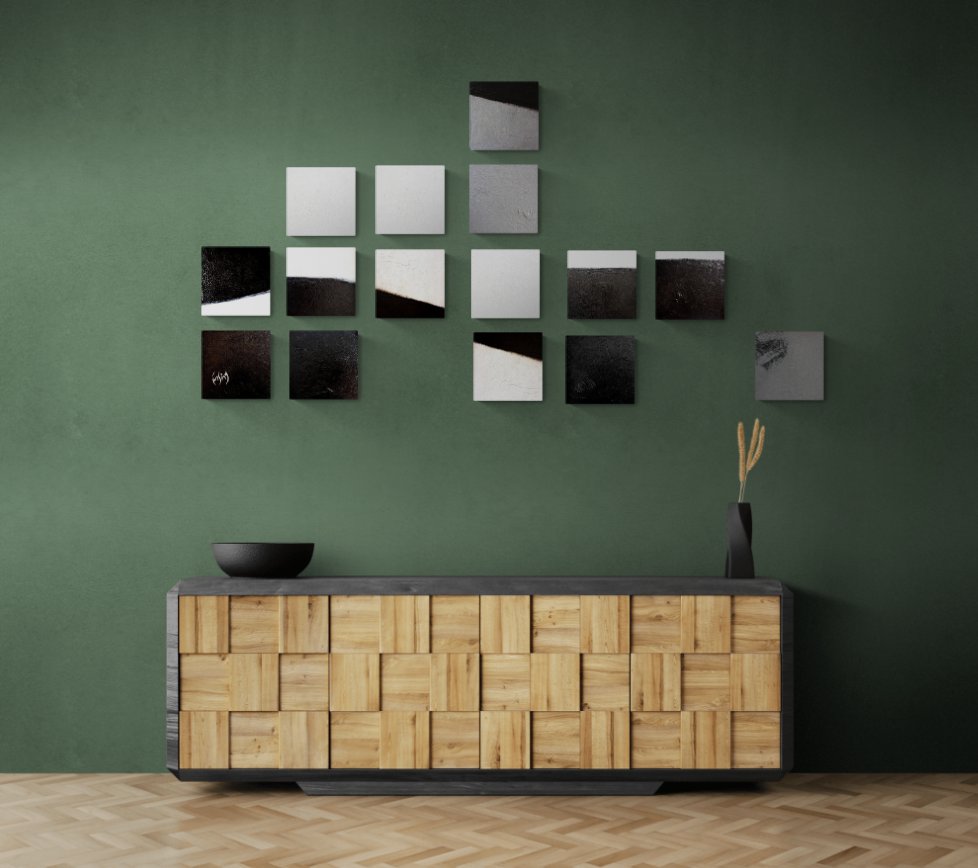
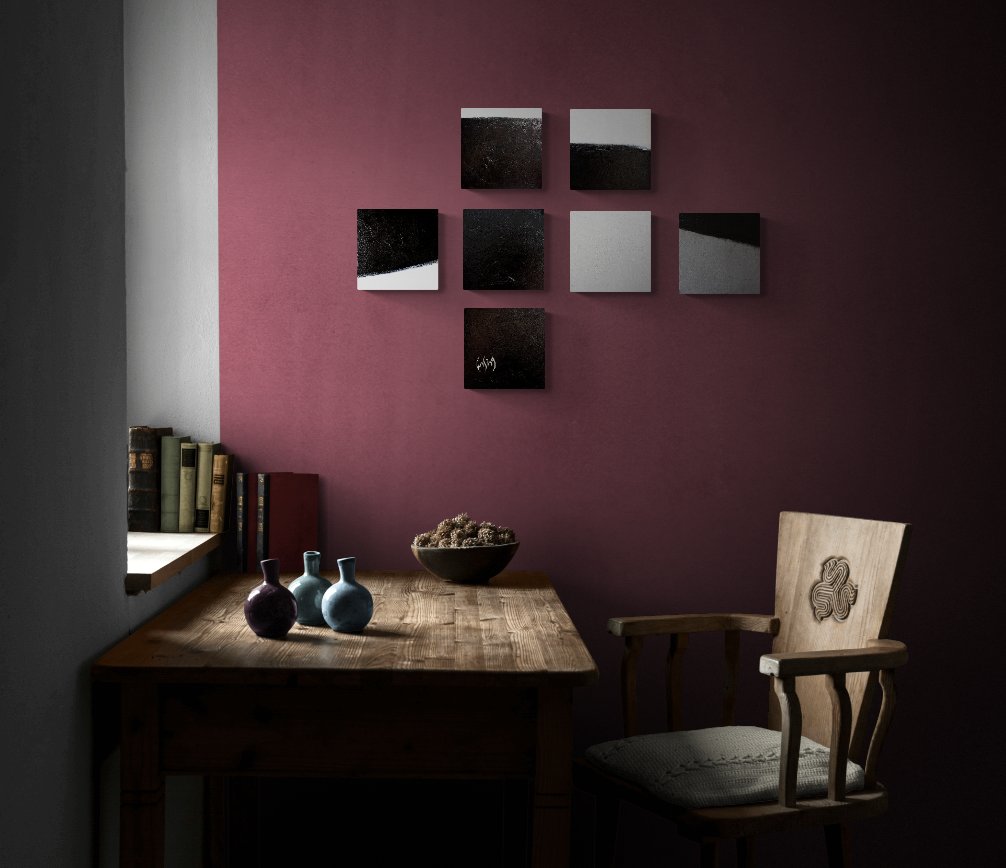
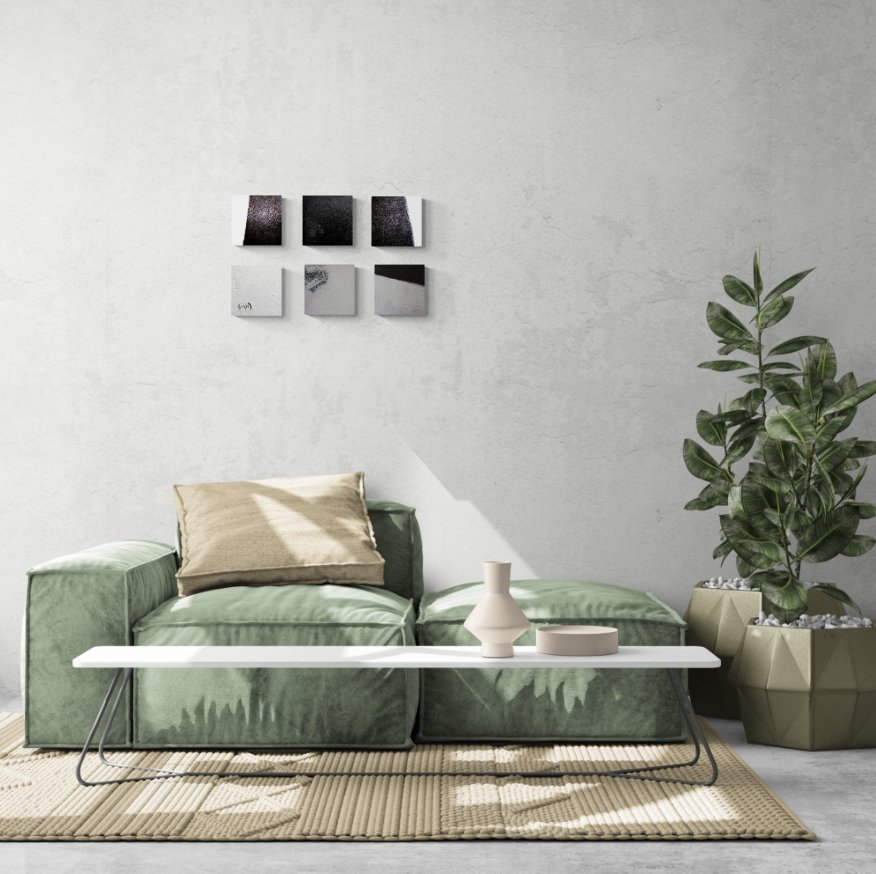
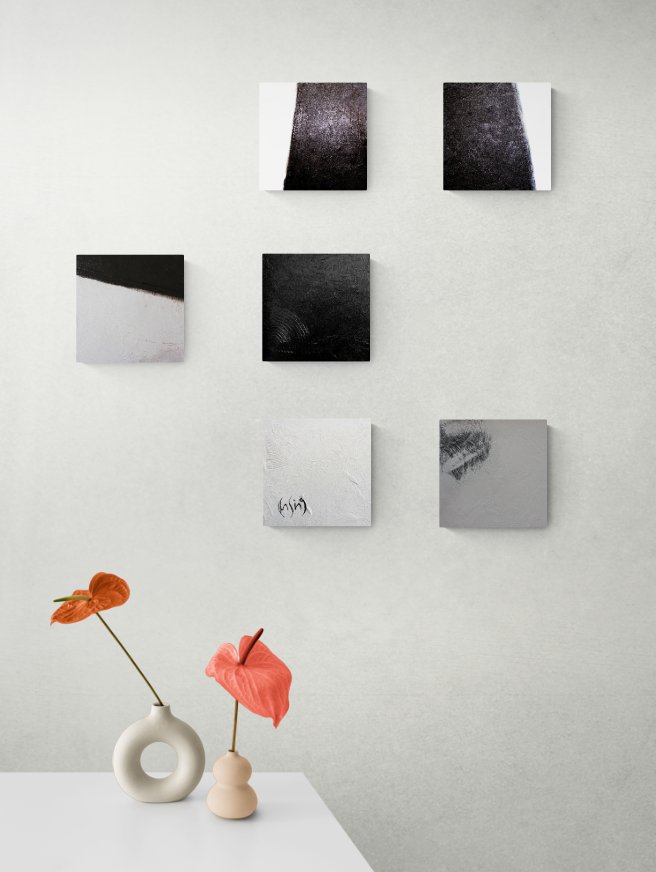
Each edition of BINARY POSITIONS is created for its space. The panels form a constellation shaped by the interior: the room, or the areas the work bridges, invites the layout.
The panels can open into a loose cloud, stack into a column, climb as a stair, or cross as an axis. In some editions they divide into two clusters facing each other across the wall: two lenses of thought held apart. Each arrangement sets the poles in a different relation: opposed, ranked, intersecting or dispersed.
Beyond a single wall, the work becomes a connecting thread. One lens can hold one room and the other the next, with the divided panels carrying across the doorway between them. Separate spaces then read as one landscape, shared even where its positions are not.
The room images on this page are visualisations, made before installation to show how the work could sit in different interiors. They are not photographs of the final installations.